
Bodyweight Calf Raises

Bodyweight Calf Raises are a lower body strength exercise that, if done at high enough volumes, can absolutely torch your calves using just your bodyweight.
In this guide, I’m going to teach you how to do Bodyweight Calf Raises along with a few variations you can try out.
How To Do Bodyweight Calf Raises
Equipment Needed
- None
Step-by-Step Instructions
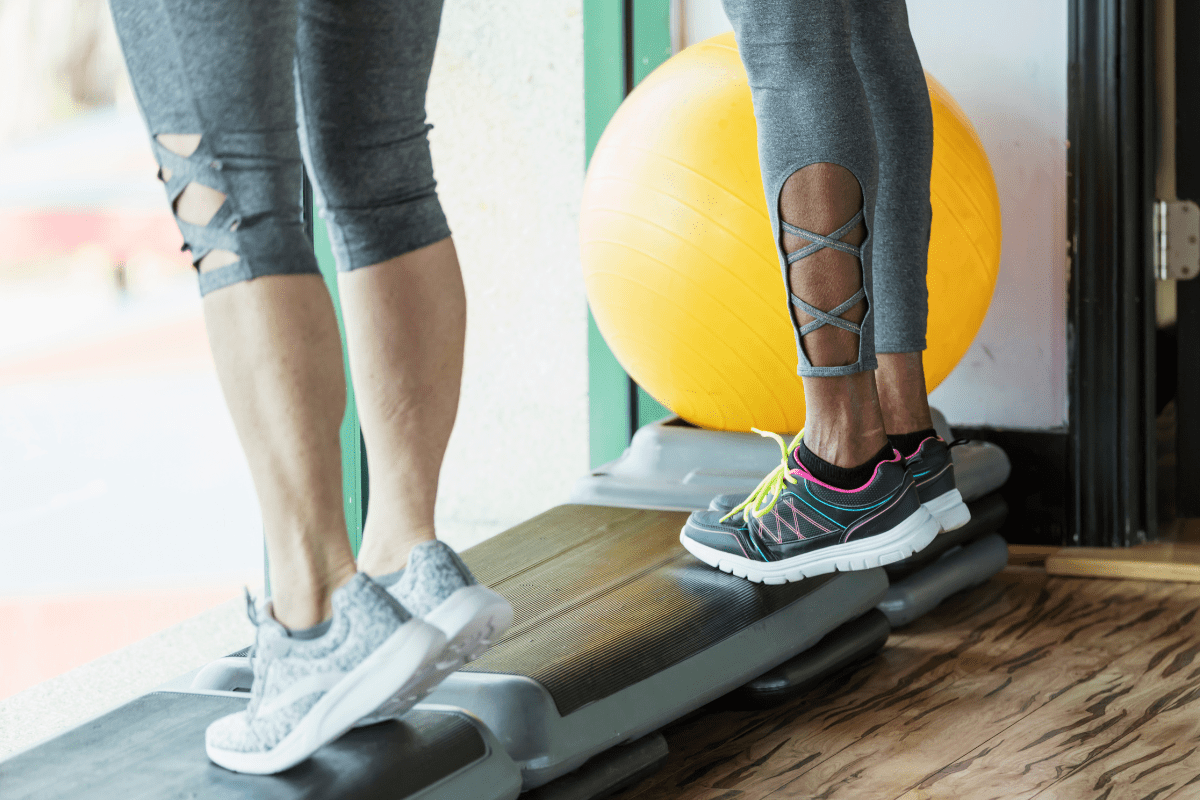
- Find a ‘ledge’ that will allow you to drop your heels below the balls of your feet. This could be the edge of a lifting platform, the bottom of a squat rack or the end of a stair.
- Now, position the balls of your feet on the ledge, with the edge about mid-foot and your heels hanging beyond the edge.
- Flex the calves and raise yourself up onto the balls of your feet. Hold the top for a 1-second count.
- Lower yourself down under control until your heels are an inch or two lower than the edge of your ledge.
- Repeat up and down until all reps are completed.
Coaching Points
Control each rep. The biggest mistake I see is athletes bouncing up and down and rushing through reps way too quickly.
Bodyweight Calf Raise Variations
Internal and External Rotation
This variation has its roots buried in a bit of bodybuilding bro science, but it’s one that has stuck with me throughout my life.
After you complete a set of bodyweight calf raises, internally rotate your ankles (point your toes slightly toward each other) and immediately jump into another set. If your calves still aren’t burning enough, finish them off with another set with your ankle externally rotated.
Single-Leg Calf Raises
Another way to increase the challenge of bodyweight calf raises is to do them one at a time. Place one foot behind the calf and perform all reps on one leg and then switch.
More Links and Info
Head over to our Exercise Library for more Lower Body Lifts.
