
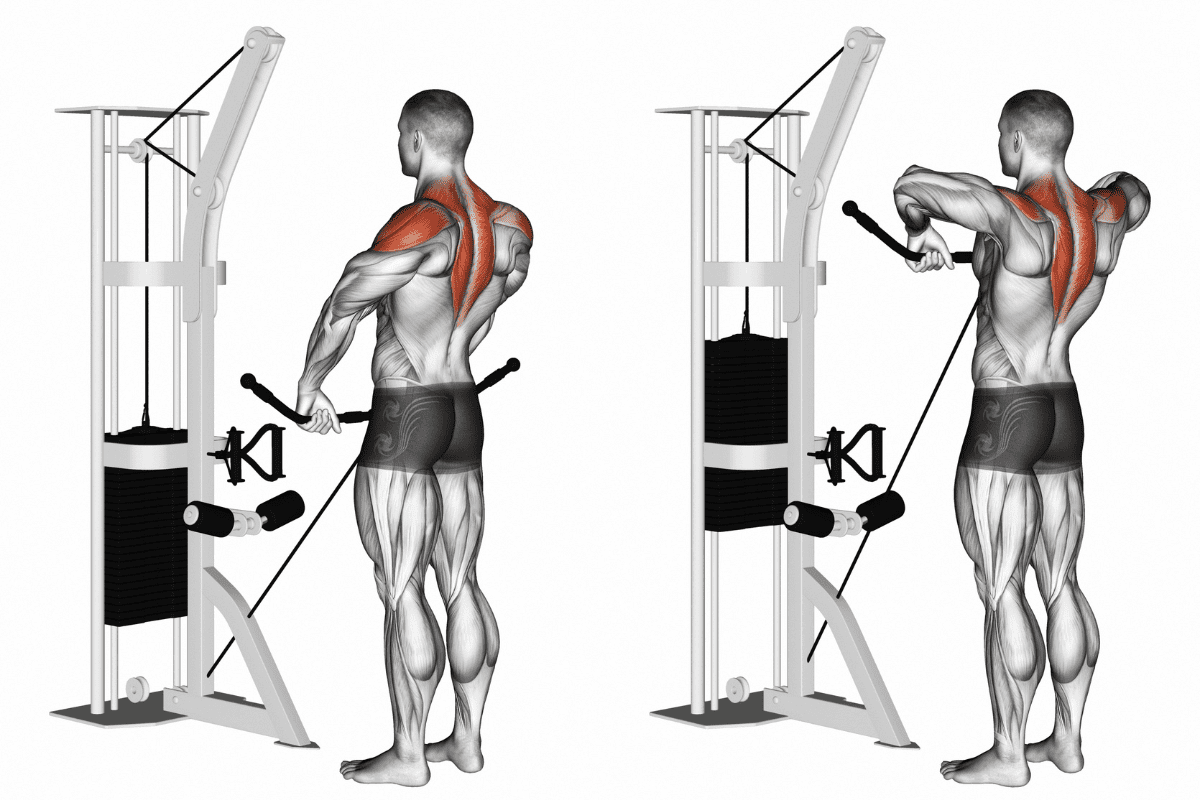
Cable Upright Row (How To, Muscles Worked, Benefits)

Cable Upright Rows are a great upper back exercise. They’re also a good supplemental movement for bigger Olympic movements like Snatches and Cleans.
In this guide, I’ll teach you how to do Cable Upright Rows including important coaching tips. I’ll also share with you the muscles worked, benefits and a few alternatives if you’re unable to do upright rows with a cable machine.
How To Do Cable Upright Rows
Equipment Needed
- Cable Machine
Step-by-Step Instructions
- Attach a straight handle* to a cable machine and lower the attachment pin to the bottom of the beam.
- Grab the handle with an overhand grip and stand tall with the handle starting right in front of the thighs.
- Flex your knees slightly and stand upright with good posture.
- Pull the cable handle upward along the abdomen and chest toward the chin.
- At the top, the elbow should be higher than the wrist, and above the shoulders.
- Lower the handle under control back to the front of the thighs.
- Do not ‘jerk’ or ‘rock’ the weight up and keep the handle close to the torso throughout.
Coaching Points
*You can use multiple different attachments other than a straight handle. The Rope Attachment is another popular attachment for cable upright rows.
Benefits
Cable Upright Rows are an excellent exercise for training both the shoulders and upper back.
Specifically, when it comes to using a cable machine – being able to choose between different cable attachments (straight bar, rope, etc) can be very beneficial. Upright rows can bother lifters’ wrists, but by being able to choose between different styles of grip you’re likely to find at least one that is comfortable for you to work with.
How Many Reps?
Cable Upright Row is a supplemental strength exercise. Recommended rep ranges are 3 to 4 sets of 8 to 12 reps.
Muscles Worked
Cable Upright Rows work the entire Trapezius as well as the Deltoideus and Brachialis. In plain English – the upper back, shoulders and biceps.
Cable Upright Row Alternatives
If you’re unable to do cable upright rows, for whatever reason (you don’t have a cable machine for example), or you’re just wanting to mix up your workout a bit here are a few alternatives.
Need more options? Here are my 10 favorite Cable Upright Row alternatives.
Barbell Upright Rows

If you don’t have a cable machine, Barbell Upright Rows can be a good alternative. The setup and the movement itself is basically exactly the same, only using a barbell in place of a cable machine.
Pro Tip: Barbell Upright Rows can be extremely uncomfortable for some lifters. If you experience any pain while trying to do them, opt for one of the other alternatives instead.
Band Upright Row
Using a resistance band to do Band Upright Rows allows the lifter to find a movement path that is more comfortable for them.
Experiment slightly with the angles of the exercise to try and find where the movement feels best. If you find that Band Upright Rows still irritate your shoulders, don’t do them. There are always other options for any exercise.
Shrugs

While not an exact substitution, Shrugs are another great upper back/trapezius exercise. Shrugs come in multiple variations as well – barbell or dumbbell and different grip widths on the bar all can change up the lift.
More Links and Info
Featured Image Photo Credit: Makatserchyk / shutterstock.com
Need more Upper Body Strength Exercises? I have a growing collection of guides in my Exercise Library – all available for free.
