Hang Muscle Clean (How To & Variations)

The Hang Muscle Clean is an excellent Clean variation that can be used as part of a teaching progression or as a barbell warm-up to prepare yourself for an Olympic lifting workout.
It’s also one of my favorite Clean variations for athletes because it allows the athlete to really focus on the power development and triple extension of the movement.
In this guide, I will teach you how to do Hang Muscle Cleans, explain its benefits and provide you with a few alternatives.
How To Do Hang Muscle Cleans
Equipment Needed
- Barbell
- Bumper Plates
Step-by-Step Instructions
- Start by taking a clean grip, about a thumbs length away from the start of the knurling. Using a hook grip (wrapping the fingers over the thumb) is recommended.
- With a flat back, stand tall with the bar.
- Eyes should be focused straight ahead, and weight distributed between the heel and mid foot.
- Curl the wrists by turning the knuckles down towards the floor.
- Set the back by squeezing the shoulder blades together (“chest out”) and engaging the lats.
- Deep breathe in and brace the core.
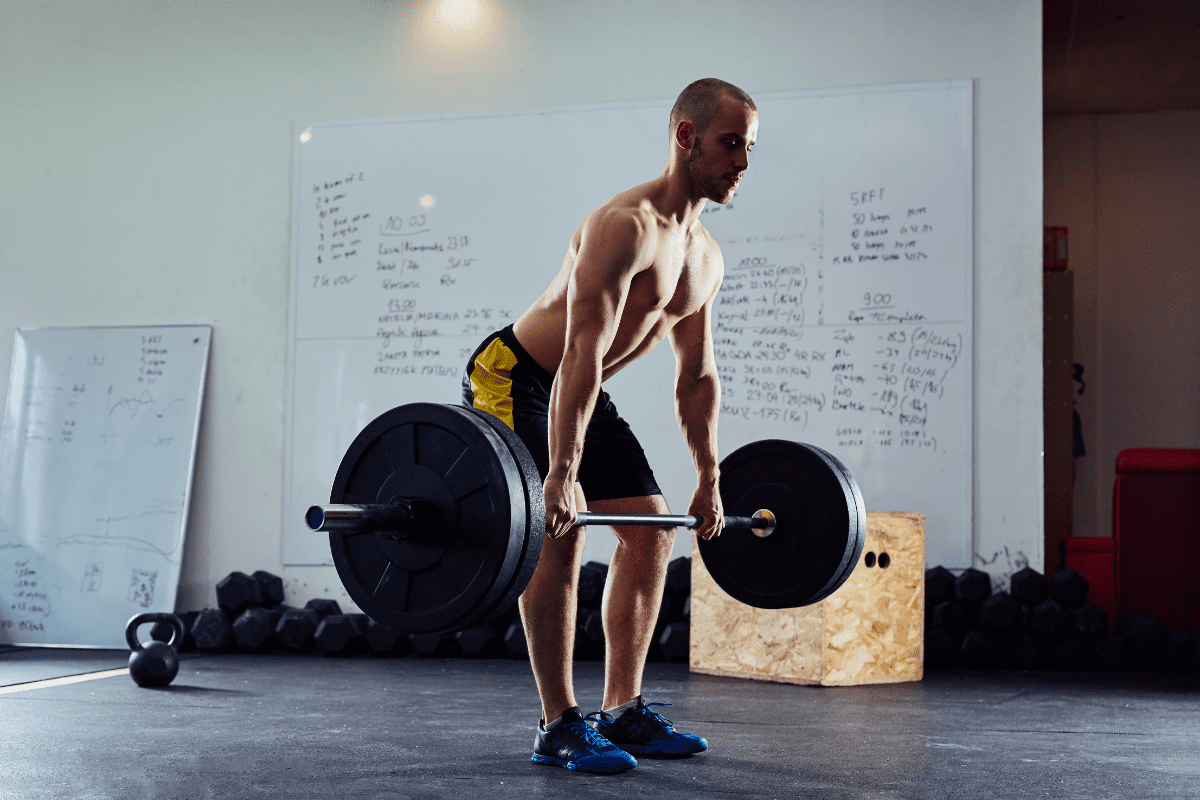
- Put a slight bend in the knee and then hinge forward by pushing the hips back and allowing the barbell to slide down the thigh. Shoulders should end up above, or slightly in front of, the bar.
- Once the bar reaches a few inches from the knee – you are now in the proper hang position for the Hang Power Clean.
- From here, drive the floor with the feet and explosively extend the hips forward.
- Finish the drive by triple extending through the hips, knees and ankles. An aggressive shoulders shrug should immediately follow this full extension.
- Now, pull the elbows high while keeping the bar close to the body.
- Bring the bar to shoulder height while staying fully extended through the hips, knees and ankles.
- Transition to the front rack position by punching the elbows under the bar, finishing with the elbows pointing forward and triceps parallel to the floor.
- Finally, drop down to a flat-footed position and reset the bar back to the starting position.
- Repeat for the designated number of reps.
Coaching Points
The weight used for Muscle Cleans will be lighter than any other variation. This is because the bar has to travel so high to be caught in a fully extended upright position. Resist the urge to add more weight and compromise technique.
Hang Muscle Cleans work great as a movement primer before an Olympic lifting day. I recommend adding them into a barbell complex, like a modified Javorek Complex, right before you begin your lift.
Hang Muscle Clean Benefits
The thing that differentiates Muscle Cleans from other Clean variations is the finishing position (the catch) is down at full extension. There is no full squat under the bar like a full Clean or even a quarter-squat under the bar as with a Power Clean.
This emphasis on the extension phase of the lift is a great teaching tool to reinforce proper movement patterns. The lifter is allowed to purely focus on generating as much power with the hips as possible.
I love starting an off-season cycle with a couple of weeks of Muscle Cleans to lay the foundation for working on that full triple extension.
Then, at any point during the training cycle, whenever I notice an athlete struggling with cutting their pull short and rushing into the catch I will have them switch to Muscle Cleans (Hang or from the floor) to reinforce proper mechanics.
Hang Muscle Clean Variations
Olympic lifts have dozens of different variations – all with different starting positions, catching positions and points of emphasis. Here are two of the variations that I think most closely relate to Hang Muscle Cleans.
Hang Power Clean
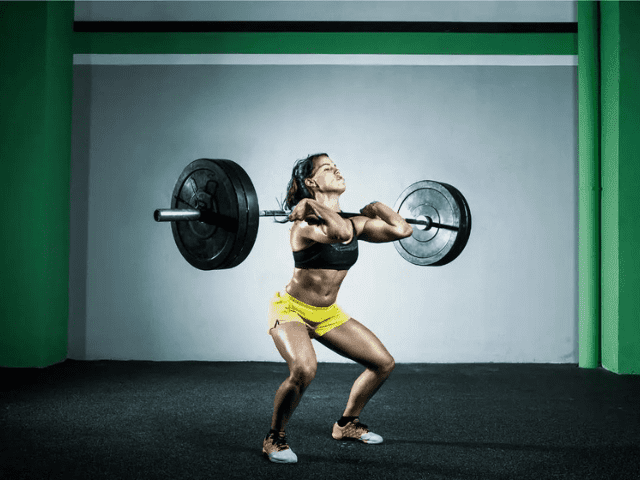
The most obvious variation to Hang Muscle Snatch is the Hang Power Clean.
The starting position and the drive are exactly the same with both lifts. The only thing difference between the two is the catch.
Instead of catching at full extension, the lifter will drop down in a quarter-squat position to receive the bar. Because the bar doesn’t need to be driven as high, this allows the lifter to be able to successfully lift a considerable amount more weight.
Hang Muscle Snatch
Another “Muscle” variation from the hang position is one of my all-time favorites, the Hang Muscle Snatch. The technique is exactly what you would expect – a snatch version of the Muscle Clean.
The weight is a little lighter, but the speed and explosiveness you’re able to get on the bar is the reason I love this movement so much.
Muscle Cleans
Muscle Cleans are another very close variation. The only difference between the two lifts is the Muscle Clean starts from the floor as opposed to the hang position.
Hang Muscle Clean Alternatives
If you don’t feel comfortable with your Olympic lifting technique or maybe you have an injury limiting you from being able to do Hang Muscle Cleans – here are a couple of alternatives that you may be able to use as a substitution.
Kettlebell Swing
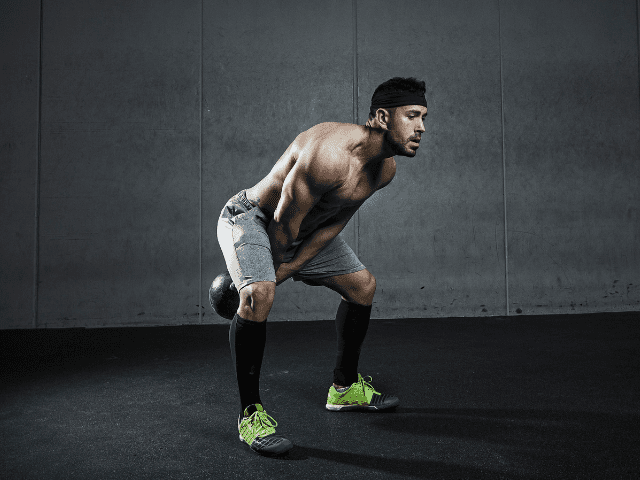
Kettlebell Swings will also work the triple extension of the hips, knees and ankles – and are much more technically friendly.
You can start to learn how to set your back, brace your core and hinge at your hips while still working on developing power. This would be my first recommendation for someone who doesn’t feel ready for Olympic lifts with a barbell yet.
Med Ball Cannonballs
Med Ball Cannonballs are another triple extension movement that uses a Medicine Ball instead of a barbell or kettlebell.
Assume the same athletic position – chest out, knees bent, hips hinged – as the starting position of a Hang Muscle Clean. From that position, simply throw the medicine ball as high you can. Let it hit the ground, catch it off the bounce and repeat.
More Links and Info
Featured Image: baranq / shutterstock.com
If you’d like to get complete guides for more Olympic lifts and Olympic lift variations, make sure to head over to the Olympic Lifting Section of our Exercise Library.
