

Inchworm (Exercise How To Guide)

Inchworms are an underutilized warm-up exercise that works pretty much your entire body. They are designed as a dynamic hamstring movement, but as anyone who has done them will tell you – Inchworms can also light your shoulders on fire.
They are two main Inchworm variations – moving and in-place – and I’ll cover both in this guide.
I’ll also give you step-by-step instructions on how to do Inchworms, exactly what muscles they work and provide you with a few alternatives.
How To Do Inchworms
Equipment Needed
- None
Step-by-Step Instructions
- Start in an upright standing position.
- Hinge forward at the hips and reach the hands down to the feet while keeping the legs straight. (Basically, it’s a standing hamstring stretch)
- Now, place your hands on the ground just in front of your feet. Bend your knees only the amount necessary to get your hands to the ground.
- Keeping the legs straight, brace the core and walk your hands out until you end up in a Push-up position.
- If doing Inchworms for distance, begin taking very small steps, slowly walking your feet back to your hands. Once you get your feet back up to just behind your hands walk your hands back out again to a pushup position.
- Repeat until you complete the designated distance.
- If doing Inchworms in place, walk your hands back toward your feet. Once you get your hands right in front of your feet walk them back out again to a Push-Up position.
- Repeat until you complete the designated number of reps.
Coaching Points
Yes. It is perfectly okay to stand up tall as needed to rest and shake out your shoulders and, perhaps, to stop the blood from rushing to your head.
The biggest mistake I see with Inchworms is bending the knees way too much and taking way too big of steps. Yes, taking big steps will help you go faster. But, that will almost greatly reduce the effectiveness of the hamstring stretch and your shoulders burning is supposed to be part of the exercise. Embrace it.
Muscles Worked
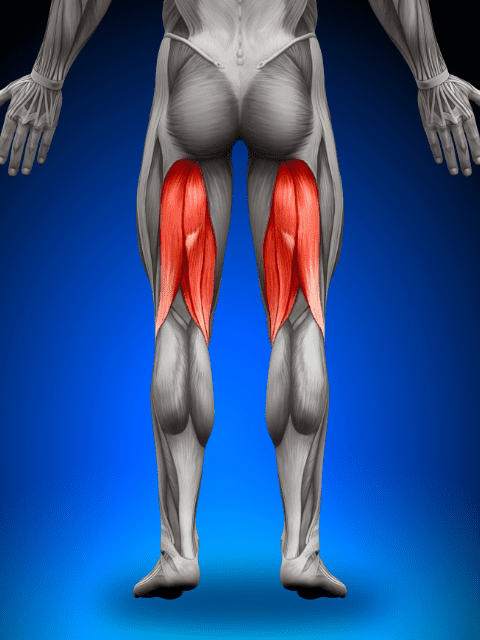
All of them. At least that’s what it feels like.
My primary objective with Inchworms is to take the hamstrings through a full range of motion. Every time you walk your feet up towards your hands, you’re stretching your hamstrings a little bit more each step.
In addition to the hamstrings though, because you spend so much time bracing and walking on your hands during the movement, your shoulders (and upper back) get a heck of a workout as well.
Finally, don’t forget about the core. From the moment you walk out into that first push-up position, your core is having to work to brace and stabilize to keep your torso in a good position.
Inchworm Variations
Inchworm + Push-up
The only variation that I’m really aware of when it comes to Inchworms (except for in-place versus moving) is to add in a push-up. So, every time you walk you hands out to the push-up position, go ahead and do a push-up.
This addition almost tips the scales from Inchworms being a warm-up exercise to a full-on upper body finisher at the end of a workout.
Inchworm Alternatives
Looking for a hamstring warm-up exercise that’s, well, anything but Inchworms? Here are a couple of other hamstring movements you can try out:
Walking High Kicks
If you’re warming up on a field, Walking High Kicks are a good substitution for Inchworms. Granted, you won’t get all of the additional upper body work, but Walking High Kicks are a simple, but effective hamstring warm-up.
Supine Straight Leg High Kicks
If you’re in the gym and short on space, try Supine Straight Leg High Kicks.
Supine simply means laying on your back. From that position, bend one knee and put that foot flat on the floor. Then, raise the other leg (keeping it straight of course) as high as possible. Lower back down to the ground and repeat.
More Links and Info
Looking for more warm-up exercises to add to your workout plan? Make sure to check out the Warm-Up Section of our Exercise Library.
