
Manual Leg Curl (How To, Muscles Worked, Benefits)

Manual Leg Curls are not just effective if you’re short on equipment, they’re one of the best hamstring exercises for working both the concentric and eccentric portions of the movement.
In this guide, I’m going to teach you how to do Manual Leg Curls including important coaching tips. I’ll also tell you what muscles are worked and provide you with a few alternatives.
How To Do Manual Leg Curls
Equipment Needed
- Partner
Muscles Worked
- Hamstrings (Biceps Femoris, Semitendinosus, Semimembranosus)
- Calves (Gastrocnemius)
How To
- Lay on your stomach with your legs straight.
- Have your partner grab the backs of your heels.
- Curl your feet toward your butt and have your partner give you resistance as you do.
- Now, have your partner pull your feet back to the floor, but resist them from pulling you down.
- Continue until all reps are completed.
Coaching Points
One of the keys to the exercise is to not miss out on the eccentric portion of the exercise. Make your partner really have to work to pull your feet back to the floor. Depending on your hamstring strength, your partner may end up having to work as hard as you do!
Having a good partner is critical. They should be modifying how much resistance they’re applying throughout the movement so that you’re constantly challenged but still able to move through the range of motion.
How Many Reps?
Manual Leg Curls, if done correctly, can completely wipe out the hamstrings pretty quickly. 2 to 3 sets of 5 reps is more than enough.
Manual Leg Curl Benefits
Manual Leg Curls are a great movement for working the entire range of motion of the hamstring. This is because the partner has full control over how much resistance to give the lifter during each portion of the movement.
They don’t require any equipment. They can be done pretty much anywhere, anytime – all you need is a partner. This makes them a great alternative for exercises like Lying Leg Curl that need a leg curl machine in order to do.
Manual Leg Curl Alternatives
Need an alternative for Manual Leg Curls? Here are a few exercises that you may be able to use as a replacement.
Stability Ball Leg Curls
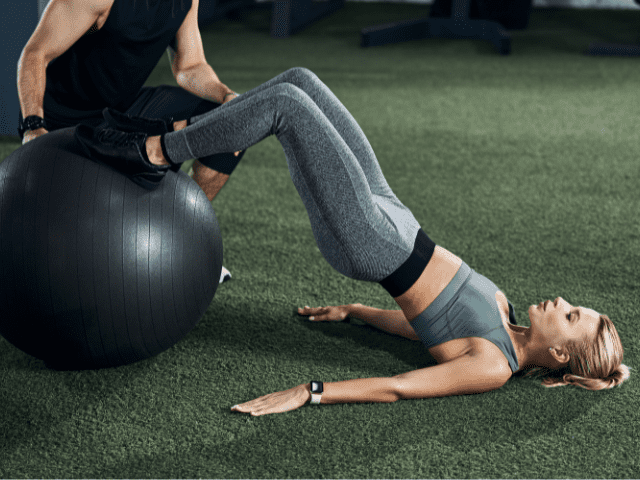
Stability Ball Leg Curl is where the athlete lies on their back. Both legs start fairly straight with the heels on the ball. The athlete will bridge the hips up and curl the ball underneath them and then extend back out.
Nordic Hamstring Curls
Nordic Hamstring Curls are another hamstring exercise that is generally done with a partner (although they can also be done without a partner).
They’re one of my favorite hamstring movements to use with athletes because of the research that has been done that shows them to be effective in helping to prevent hamstring pulls.
More Links and Info
If you’d like to see more hamstring exercises, head over to the Lower Body Lifts section of our Exercise Library. There you’ll find dozens of exercises, all with complete step-by-step instructions.
