

Reverse Cable Curl (How To, Muscles Worked, Benefits)

If you have access to a cable pulley machine, then chances are Cable Curls make an appearance now and then in your workouts. They’re super easy to set up, you don’t have to put away weights when you’re done and you can get an awesome biceps and forearm pump. Win. Win. Win.
In this guide, I’m going to teach you how to properly do Reverse Cable Curls, some coaching points to focus on and a few alternatives if you don’t have a pulley machine.
How To Do Reverse Cable Curls
Equipment Needed
- Pulley Machine
Muscles Worked
- Biceps (Biceps Brachii, Brachialis, Brachioradialis)
Step-by-Step Instructions
- Slide the pin to the bottom of the cable machine.
- Hook a straight bar attachment onto the cable.
- Grab the attachment with an overhand grip (pronated) and stand about a half step away from the machine – just enough room where you won’t hit it as you curl.
- Stand tall with good posture and a slight bend in the knee.
- Flex the biceps and curl the attachment up towards the shoulders, squeezing the biceps at the top of the movement.
- Lower back to the starting position under control.
- Continue until all reps are completed and then gently lower the attachment back down to the floor.
Coaching Points
Don’t just let the attachment go at the end of your set and allow the attachment to go flying and slam back into the machine. This will obviously tear the machine up. It astonishes me that people would disrespect equipment like that, but unfortunately, I see it happen all the time.
As for the actual technique of the lift, the biggest mistake I see with Reverse Curls (whether with a cable or a barbell) is allowing the wrists to bend forward. This places undue stress on the wrist and can make the lift very uncomfortable. Keep the forearms engaged and maintain a neutral wrist position as you curl.
How Many Reps?
Reverse Cable Curls are generally done as a supplemental exercise toward the end of a workout. The suggested rep range is 3 to 4 sets of 10 to 15 reps.
Reverse Cable Curl Alternatives
Don’t have access to a cable machine and need an alternative? Here are a couple of exercises that you may be able to use as a substitution.
Reverse Curls
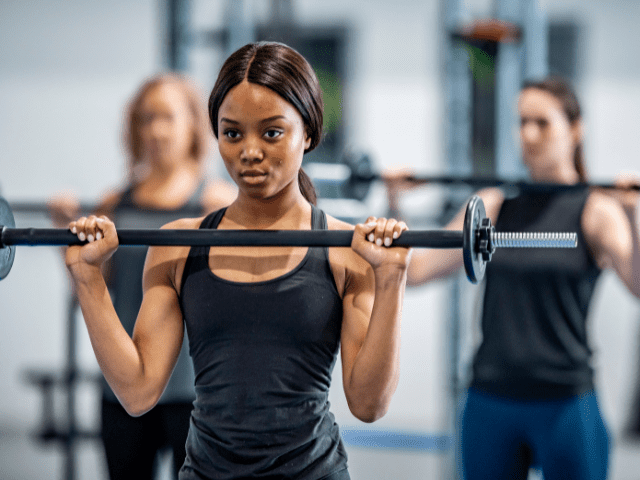
If you don’t have a cable machine, don’t worry, Reverse Curls are a perfect (some would even say better) alternative to their dumbbell cousin.
Stand tall, grip the bar shoulder-width apart, keep elbows tucked and curl the bar up to shoulder level. Slowly lower back to the starting position and repeat for the desired number of reps.
Band Curls
If Reverse Curls bother your wrist or elbow, you may be able to give Band Curls a try.
Stand on one end of a resistance band and grab the other end with both hands. With Band Curls, you can use more of a neutral grip by keeping your palms facing each other.
Sometimes this type of grip (also similar to the grip used in hammer curls) can be less stressful on the wrist and/or elbow.
More Links and Info
Looking for more biceps exercises? The Horton Barbell Exercise Library has a complete section dedicated to arms affectionately referred to as the Arm Farm. It has dozens of biceps and triceps exercises – all with complete instructions, all for free.
