
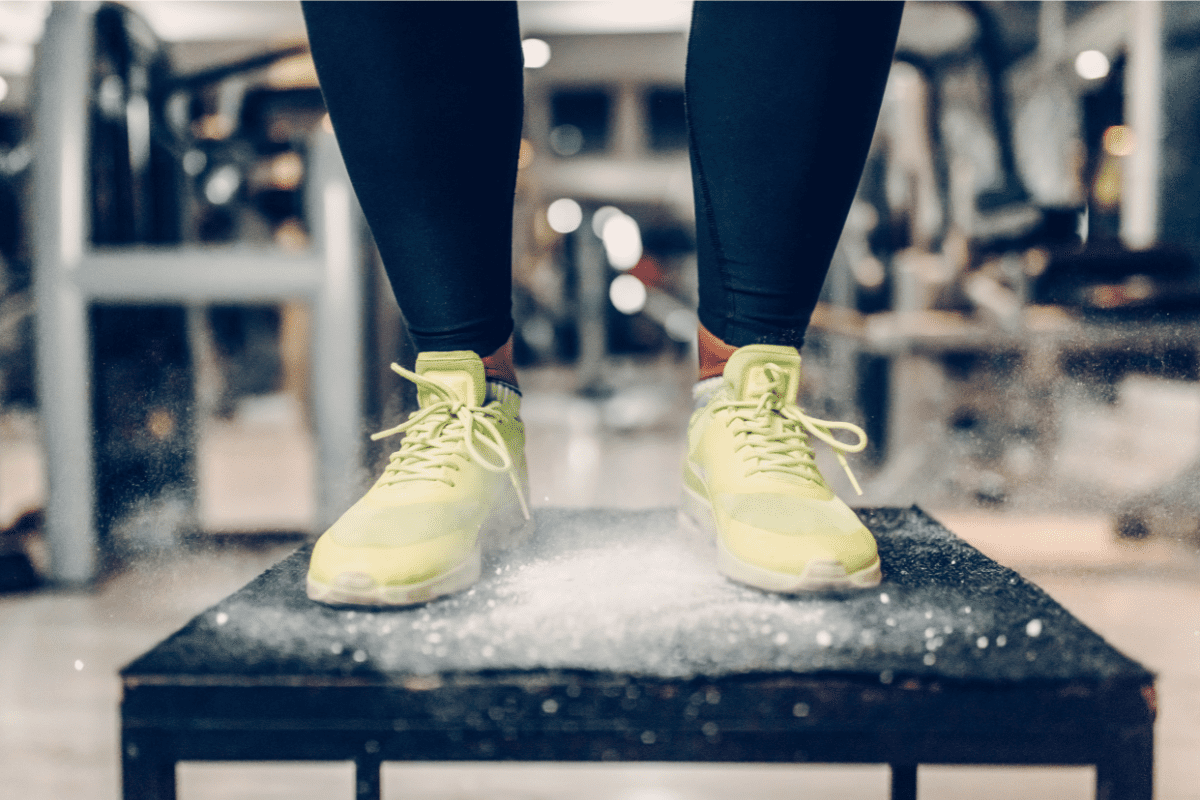
Single Leg Squat Off Box (How To, Muscles Worked, Benefits)

Single-leg squats off the box are an extremely challenging single-leg exercise that requires a great amount of strength and mobility. Most athletes will begin with an easier variation (squatting down to a box or bench) and then progress toward a full pistol squat and then single leg squat off the box.
In this article, I’m going to teach you how to do a single-leg squat off the box. This article is building off of Coach Horton’s article which already lays out a great progression for pistol squats.
How To Do Single Leg Squats Off The Box
Equipment Needed
- An extremely stable box or bench
- A partner who will hold down the side of the box if needed as a counterweight.
Step-by-Step Instructions
- Stand tall with one leg down and the other straight drifting off the side of the box.
- Initiate the squat by hinging at the waist and bending at the knee simultaneously.
- Descend until the hip crease is just below the knee.
- Keep the heel flat and center of mass over the mid-foot.
- Keep the torso as vertical as possible. Sometimes holding the arms straight out from here will help with balance and torso positioning.
- Once you reach depth, drive through the heel, keeping the foot flat, and stand tall.
Coaching Points
This is by far one of the most difficult variations of single-leg training. A proper progression needs to be followed in order to prepare the athlete for a movement like this.
Coach Horton has a great progression outlined in his article on pistol squats.
Muscles Worked
- Quads
- Hamstrings
- Glute Muscles
Single-Leg Alternatives
If you don’t have a tall box to be able to squat off of, here are a few single-leg alternatives you can try out instead.
Split Squat Variations
With your feet split so that your front foot stays flat and the back foot only comes up onto your toe, split squats are a great alternative. These can be utilized with multiple implements such as barbells, dumbbells, kettlebells, and body weight.
Reverse Lunge Variations
These can be utilized with multiple implements such as barbells (Barbell Reverse Lunge), dumbbells, kettlebells, and even body weight. This movement is very sport-specific, training positive shin angles, torso, hip, and knee flexion to extension.
Step Up Variations
These can be utilized with multiple implements such as barbells, dumbbells (DB Step Ups), kettlebells, and body weight. This movement trains explosive knee drive and down leg stability.
More Links and Info
Looking for more Lower Body Lifts? Check out the Exercise Library where there is a growing collection of exercises with step-by-step instruction. All for free.
