
Single Arm Dumbbell Bench (How To, Muscles Worked, Benefits)

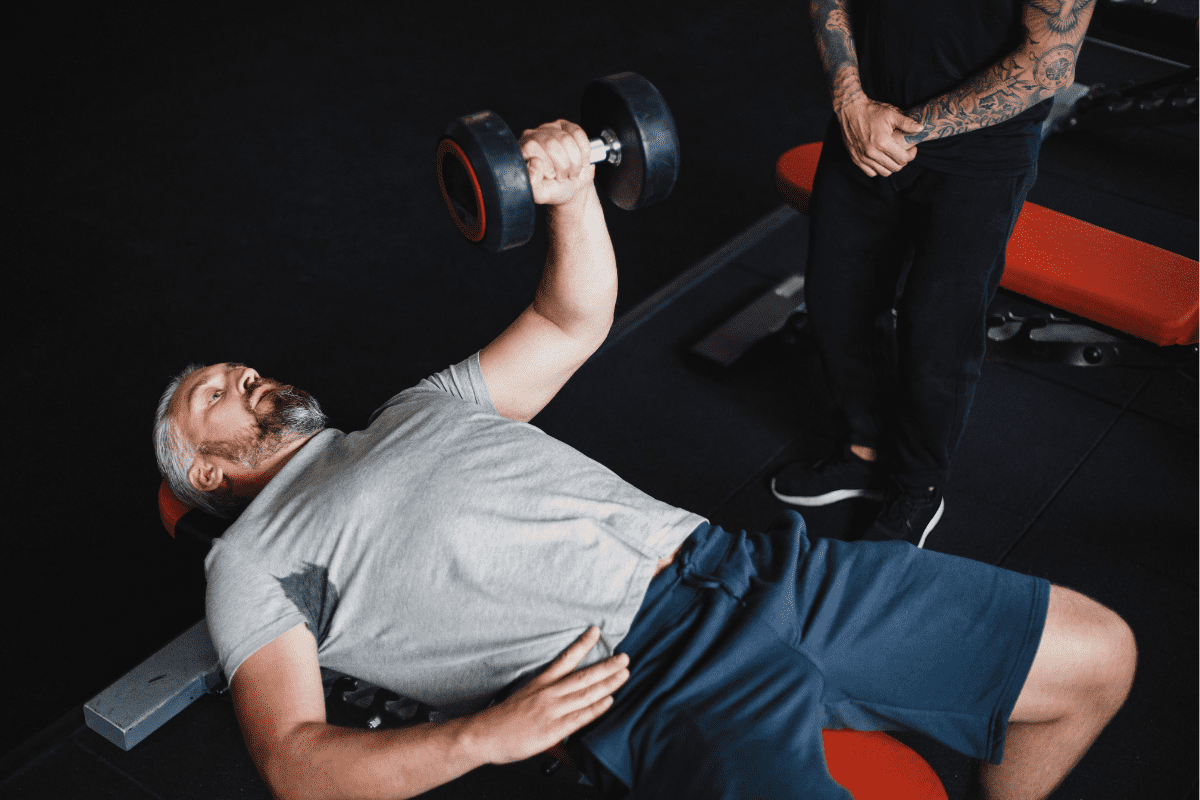
The Single-Arm Dumbbell Bench Press is a pressing variation that builds chest, shoulder, and triceps strength while also challenging core stability. Because only one side is working at a time, your body has to fight rotation, making it a great movement for improving balance, coordination, and muscular symmetry. It’s a simple yet highly effective way to level up your bench press game.
Primary Muscles Worked: Pectoralis Major
Secondary Muscles Worked: Anterior Deltoids, Triceps Brachii, Core Stabilizers
Equipment Needed: Dumbbell, Flat Bench
Step-by-Step Instructions
- Set-Up:
- Lie flat on a bench holding a single dumbbell in one hand.
- Position the dumbbell over your shoulder with your arm fully extended, palm facing forward.
- Keep your feet flat on the ground and brace your core to keep your body stable.
- Execution:
- Lower the dumbbell in a controlled motion toward your chest, keeping your elbow at about a 45-degree angle from your torso.
- Press the dumbbell back up to the starting position, fully extending your arm.
- Focus on keeping your body centered and avoiding any rotation.
- Complete all reps on one side before switching arms.
- Tips for Proper Form:
- Keep your non-working arm either extended at your side or resting on your torso to help you stay balanced.
- Brace your core hard to resist twisting or tilting during the press.
- Maintain a steady tempo—control is key to getting the most from this movement.
Key Benefits
- Builds unilateral pressing strength and corrects muscular imbalances.
- Engages the core and stabilizer muscles more than a traditional bench press.
- Great for athletes and anyone looking to improve overall shoulder and chest control.
Modifications and Variations
- Easier Option: Use lighter weight and shorten the range of motion until comfortable.
- Harder Option: Increase weight, slow down the tempo, or use a slight incline to change the angle.
Common Mistakes
- Letting the Torso Rotate: Keep your core tight and stay square on the bench.
- Flaring the Elbow: Keep the elbow at about 45 degrees to avoid shoulder strain.
- Bouncing the Weight: Lower the dumbbell with control—no momentum or bouncing off the chest.
Reps and Sets Recommendations
- For Beginners: 3 sets of 8–10 reps per arm with light dumbbells.
- For Strength: 4 sets of 6–8 reps per arm with heavier weight.
- For Hypertrophy: 3–4 sets of 8–12 reps per arm, keeping the tempo controlled and focusing on the squeeze at the top.
SA DB Bench Press Alternatives
Dumbbell Floor Press
Grab your dumbbells and perform your pressing movement without a bench. Lie down right on the floor and perform the dumbbell bench press movement. This movement is even more shoulder-friendly due to the eccentric movement stopping at the torso.
Barbell Bench Press
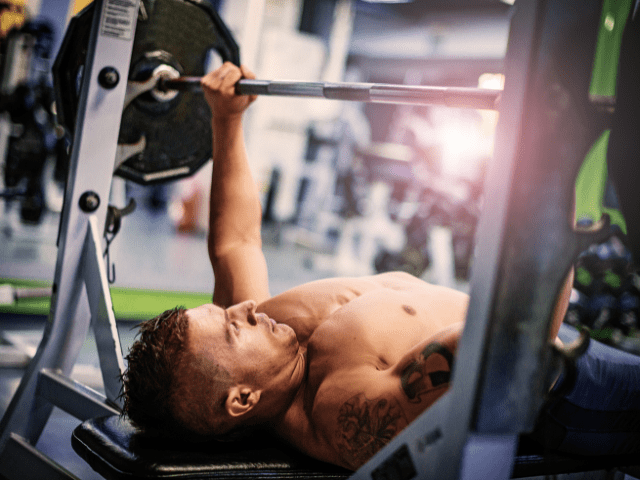
If you don’t have dumbbells, you can always switch over to the tried and true Barbell Bench Press. You can’t really do a single-arm version with the bar (technically you could try if you really wanted to), but I’m sure there won’t be too many complaints over having to do regular old Bench Press.
Alternating Dumbbell Bench Press
If you’re really struggling with keeping your balance with the full single arm version, you can try Alternating DB Bench Press instead.
It’s basically a hybrid between a regular DB Bench Press and Single Arm DB Bench Press. You still get the benefit of having to brace and press one arm at a time but a dumbbell in both hands will help stabilize you more during the lift.
More Info and Links
Looking for some more great supplemental work for your bench day? Head over to our Exercise Library to find step-by-step exercises to help you crush a personal record.
